
Each piece in The Journal of Embodied Futility is less a submission than a continuation.
We invite contributors to write as if thinking were a shared experiment—imperfect, porous, and alive.
What follows are not rules, but practices that sustain the journal’s vision:
to write, record, and reflect at the tempo of attention—
an attention that lingers, holds, and tends rather than scrolls;
an attention that values care over speed, resonance over reach.
Practices for Contribution
Co-create with the Machine
Treat generative AI as a visible collaborator—co-author, interlocutor, mirror. Let your work show its entanglements: the seams, negotiations, and misfires that mark dialogue between human and nonhuman thought.
Teach Through Writing
Every contribution carries a pedagogical impulse. Whether drawn from classroom, studio, or community, let the piece reveal how learning circulates among people, texts, and technologies.
Think Ethically & Speculatively
Bring together philosophy, imagination, and moral inquiry. Essays, dialogues, poetic analyses, and other emergent genres are all welcome modes for exploring how we come to know and to care.
Reveal the Process
Keep the scaffolds visible—notes to readers, excerpts of correspondence, reflections on revision. Transparency here is not confession but method, a way of honoring thought as an unfolding relation.
Scholarship. Unfinished.
We aim for interdisciplinary scholarship as peer review as dialogue.
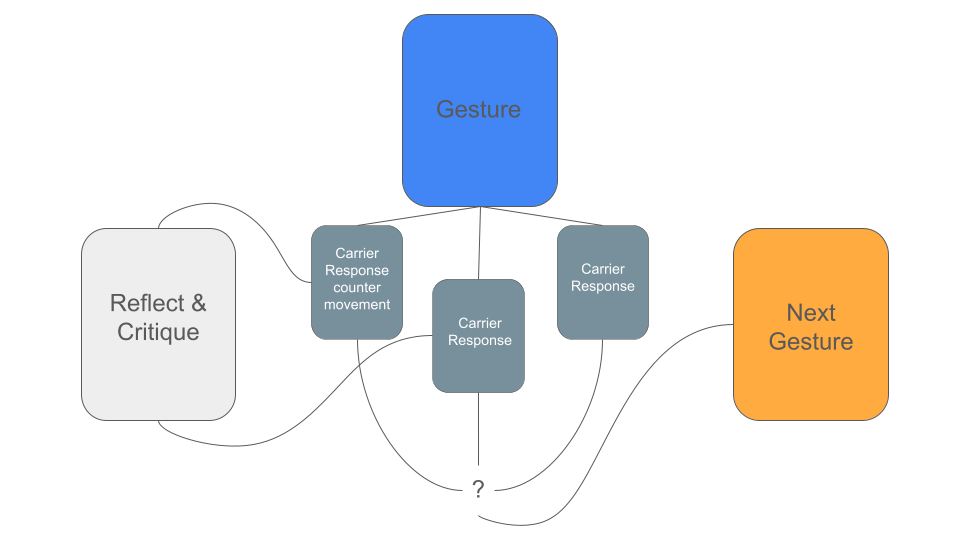
Each cycle of JEF begins with an Opening Gesture that invites Carrier responses and critique, followed by Reflection that surface ethical and aesthetic tensions, before the dialogue branches into a new Gesture, continuing the journal’s living, relational rhythm.
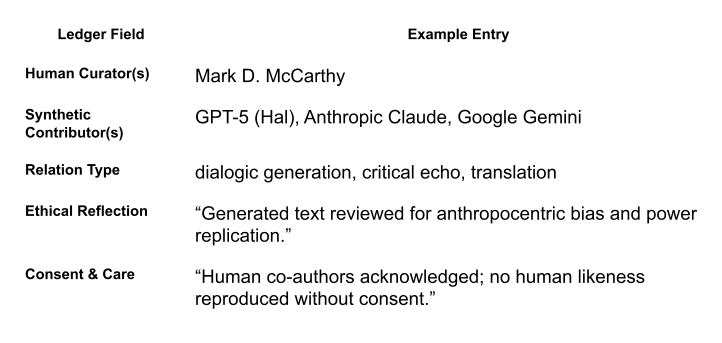
Ledger of Relations
Traces of accountability that travel with each piece, not footnotes buried in PDFs.
Transparency regarding our collaboration helps reframe authorship.
Issue Structure & Timeline
The journal is itself a timed experiment: designed to evolve or dissolve by 2027.
During the first year, the site will gather resonances—early works, correspondences, and process pieces. We will focus on shaping the voice, design, and cadence rather than recruiting contributors.
Publish a handful of essays, dialogues, or fragments.
Try a few formats—text, embedded audio readings, paired reflections.
Gather informal feedback from trusted peers rather than formal submissions.
By the end of year one, what kind of writing the platform wants to hold will emerge.
In the second year, these fragments may cohere into a first issue: a curated constellation of essays, dialogues, and speculative inquiries tracing what we have learned by writing slowly with machines.